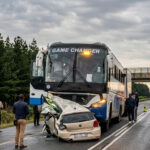
CHINHOYI – The twisted metal of a Nissan Note, its chassis crushed like a discarded soda can, lay silent on the grassy verge of the Chegutu-Chinhoyi highway this past Saturday afternoon. Beside it, the shattered remnants of another vehicle told a story that has become tragically routine on this stretch of tarmac. Two lives were snuffed out in an instant; seven others were rushed to hospital with injuries that will haunt them for a lifetime. To the Zimbabwe Republic Police (ZRP), this was just another case of “human error” or “speeding.” To the villagers of Mashonaland West, however, it was a predictable consequence of a far more sinister cause: Corruption-Induced Infrastructure Decay.
For every motorist who pays their toll fees at the gates of our national highways, there is a reasonable expectation of safety. Yet, the road connecting Chegutu and Chinhoyi remains a narrow, potholed gauntlet where death is always a stray tyre-burst or a sudden swerve away. This investigation has uncovered that the blood on this tarmac is not merely the result of poor driving, but the direct byproduct of a systemic looting machine that has turned our “Road Fund” into a private piggy bank for a well-connected “pothole elite.”
|
The Financial Disconnect: 2025 ZINARA Disbursements
|
Amount
|
|
Total Collected from Motorists
|
ZWG 12.5 Billion
|
|
Total Distributed to Road Authorities
|
ZWG 9 Billion
|
|
Mashonaland West Allocation
|
ZWG 84 Million
|
|
Vanished “Road Maintenance” Funds
|
ZWG 358 Million
|
The Financial Disconnect: 2025 ZINARA Disbursements
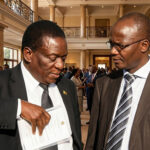
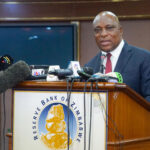
The scale of the scandal was laid bare in late February 2026, when Nkosinathi Ncube, the Chief Executive Officer of the Zimbabwe National Road Administration (ZINARA), appeared before the Parliamentary Portfolio Committee on Transport. His testimony was an admission of a staggering “vanishing act.” While ZINARA collected a massive ZWG 12.5 billion from motorists in 2025, a significant portion of the money disbursed to local authorities has simply evaporated. In Mashonaland West alone—the province through which this death trap runs—ZWG 84 million was allocated for road works. Yet, the highway remains a relic of engineering failure, devoid of proper shoulders, signage, or basic maintenance.
“When people are leaving money with us, either through licensing or through the Tollgate, they will say I have just paid, but look at the road,” Mr Ncube stated during the hearing. “Our hands obviously are tied on that because we can only recommend that we cannot execute. The most important thing in the model is the monitoring and evaluation of who did what at the end of the day.” This “blame game” between ZINARA and local councils has created a “devolution trap,” where millions are moved from the central treasury only to disappear into a black hole of administrative “other uses.”
The investigation into where this money actually went leads down a dark path of “ghost projects” and “briefcase companies.” Sources within the procurement departments of local municipalities reveal a pattern of “Negligence by Design.” Contracts for road rehabilitation are frequently awarded to companies that exist only on paper—preferred contractors who receive full payment upfront for work that is never intended to be completed. In some instances, roads are reported as “upgraded” in official ledgers while residents on the ground continue to navigate the same broken streets they have endured for a decade.
“Contractors should also be accountable at the end of the day,” Mr Ncube added during his parliamentary appearance. “It disturbs us that after some time, we see the road peeling off. Issues of accountability have to come through.”
This “peeling off” is no accident; it is the result of substandard materials and a total lack of engineering oversight. On the Chegutu-Chinhoyi highway, the lack of proper shoulders is a primary contributor to fatal head-on collisions. When two large vehicles meet on this narrow strip, there is no room for error. A single pothole forces a driver to swerve into oncoming traffic, and with no paved shoulder to retreat to, the result is inevitably a high-speed impact. The engineering failures are not just oversights; they are the physical manifestations of a corrupt procurement system that prioritises kickbacks over quality.
The scandal extends beyond the engineering failures and into the realm of police extortion. Why are unroadworthy, overloaded buses allowed to pass through multiple roadblocks before they inevitably crash? Survivors of recent accidents describe a harrowing pattern where traffic police, pressured by internal “revenue targets,” focus more on collecting bribes than ensuring road safety. A recent directive from the Zimbabwe Republic Police in late 2025 attempted to ban officers from operating transport businesses—a move that highlighted the deep-seated conflict of interest where those meant to police the roads are often profiting from the very vehicles that turn them into killing fields.
The “Police Extortion” element is perhaps the most visible part of this highway tragedy. Motorists frequently report that unroadworthy vehicles, which should have been impounded at the first roadblock, are allowed to continue their journeys after a small payment is made to the officers on duty. These “mobile tollgates” do nothing for safety; they merely add to the cost of travel while ensuring that the most dangerous vehicles remain on our roads. This culture of bribery has effectively dismantled the safety net that roadblocks were supposed to provide, leaving the public vulnerable to the negligence of unscrupulous operators.
Local villagers who live along the highway have become the first responders to these tragedies, often pulling bodies from the wreckage before the overstretched emergency services arrive. One villager, who asked to remain unnamed for fear of victimisation, described the final moments of a victim from a recent crash: “He was still conscious, calling out for his children. We tried to get him out, but the metal was too twisted. He died right there, looking at the potholes that caused his car to flip. This isn’t an accident; it’s murder by those who stole the repair money.” These accounts are common along the highway, where the sound of screeching tyres and crushing metal has become a regular part of life.
In sharp contrast to this landscape of failure, the Bulawayo City Council recently provided a rare glimmer of hope. In February 2026, officials there commissioned a fleet of new road maintenance equipment worth over US$1 million, purchased using their ZINARA allocation. This move proves that when funds are actually directed toward their intended purpose, progress is possible. It raises a provocative and uncomfortable question for the authorities in Mashonaland West: If Bulawayo can transform its allocation into a million-dollar fleet of machinery, why are the roads in your province still claiming lives?
The “Highway to Hell” is not a natural disaster. It is a man-made catastrophe fuelled by greed and a total disregard for human life. Every pothole on the Chegutu-Chinhoyi road is a monument to a stolen dollar; every white cross on the verge is a testament to a contract awarded to a briefcase company. This is the true cost of corruption—a debt that is being paid in blood by every Zimbabwean who travels these roads. The investigative documentary into the “Cost of Corruption” serves as a warning: until there is true accountability for the missing millions, the Chegutu-Chinhoyi highway will remain a scandalous death trap.
The audit findings from ZINARA have also highlighted the issue of inflated equipment tenders. In many cases, local authorities report spending millions on specialised road maintenance machinery that either never arrives or is found to be second-hand equipment purchased at the price of brand-new models. This systemic looting ensures that even when funds are technically “spent” on roads, the actual value reaching the street is a mere fraction of the original budget. The result is a cycle of decay that no amount of toll fee collection can fix as long as the procurement process remains a closed shop for the elite.
For the families of the victims, the official narrative of “human error” is a bitter pill to swallow. They know that while a driver may have made the final mistake, the environment in which that mistake was made was crafted by years of neglect and corruption. The lack of proper signage, the absence of cat’s eyes for night driving, and the jagged edges of the tarmac are all silent killers that the authorities conveniently ignore. These tragedies are entirely preventable, yet they continue to occur with sickening regularity because it is more profitable for some to let the roads rot.
As we look beyond the wreckage of the most recent accident, the question remains: how many more lives must be lost before the “Road Fund” is used for its intended purpose? The blood on the tarmac is a cry for justice that can no longer be ignored. The officials who are profiting from the lack of maintenance must be held accountable, and the “briefcase companies” that vanish with our money must be exposed. This is not just a news report; it is an exposé on a national crisis that affects every Zimbabwean who steps into a vehicle.
The investigative report into the Chegutu-Chinhoyi death trap is a call to action. It is time for motorists to demand more than just a receipt for their toll fees; they must demand a road that does not kill them. The “Highway to Hell” can be transformed back into a highway of hope, but only if the culture of corruption is uprooted from the very foundations of our road administration. Until then, the Chegutu-Chinhoyi highway will remain a scandalous truth that the authorities would rather keep buried under the wreckage.
Investigative Summary: The Cost of Corruption
|
Key Factor
|
The Scandalous Truth
|
|
ZINARA Collections
|
ZWG 12.5 Billion collected in 2025; ZWG 358 Million “vanished” at the local level.
|
|
Briefcase Companies
|
Preferred contractors receive full payment upfront for “ghost projects” that never materialise.
|
|
Engineering Failure
|
Narrow roads and lack of shoulders contribute to fatal head-on collisions.
|
|
Police Extortion
|
Roadblocks serve as bribe collection points rather than safety checkpoints.
|
|
Substandard Work
|
Roads “peel off” shortly after repair due to poor materials and lack of oversight.
|
|
The Bulawayo Model
|
Proves that ZINARA funds can buy new machinery and fix roads when managed honestly.
|
A Harrowing Account: The Final Moments
The victims of the Chegutu-Chinhoyi highway are more than just statistics in a police report. They are mothers, fathers, and children whose lives were cut short by a system that failed them. In the final moments of the Saturday crash, the air was filled with the smell of petrol and the sound of muffled cries. One survivor, still in shock, recalled the terrifying second when their vehicle hit a massive pothole: “There was no time to react. The car just jumped, and then we were in the path of the bus. I saw the driver’s face; he was trying to swerve, but there was nowhere for him to go. The road just ended.”
This “end of the road” is where the corruption meets the tarmac. For every Zimbabwean who travels these roads, this exposé is a must-read. It is a reminder that the “Highway to Hell” is paved with the intentions of officials who profit from our tragedies. The time for excuses is over; the time for accountability is now.
Key Findings of the ZINARA Audit (2025-2026)
|
Category
|
Observation
|
|
Total Provincial Leakage
|
ZWG 358 Million diverted to “unrelated expenses”
|
|
Procurement Rot
|
43 “Ghost Projects” identified in major cities
|
|
Infrastructure State
|
Roads “peeling off” within months of repair
|
|
Oversight Failure
|
Lack of monitoring and evaluation on local contracts
|
|
Equipment Scandals
|
Inflated tenders for second-hand or non-existent machinery
|

Follow @MyZimbabweNews